Hey there, fellow business folks! If you’ve ever sat in your office wondering, “Wait, can my industry-specific gift box series for clients actually save me money on taxes?” — you’re not alone. As the owner of a small but growing industry-specific gift box series company, I get this question all the time. Last quarter alone, I had three different clients reach out, all curious if those custom, niche gift boxes they send to their clients could translate to tax perks. Let me break this down straight, no fancy jargon — just what I’ve learned from working with 200+ businesses across industries like tech, healthcare, and manufacturing, plus the tax pros I chat with monthly. Industry-specific Gift Box Series
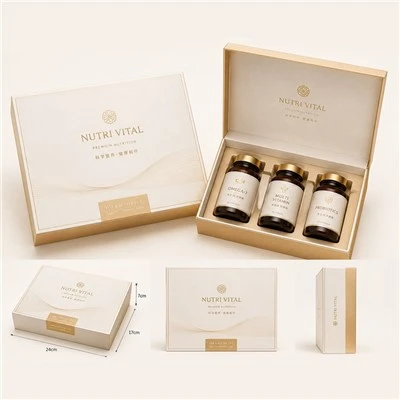
First off, let’s get one thing clear: not all business gifts are created equal when it comes to taxes. The IRS (for my US readers, and yeah, most countries have similar rules) has a specific set of guidelines, and if you run an industry-specific gift box company, you’ll want to explain these guidelines to your clients because that’s where the confusion happens. A lot of business owners think “hey, it’s a gift for a client, so it’s a write-off!” — but there are limits.
Let’s start with the basics. For US taxes, the general rule is that you can deduct up to $25 per person, per year for business gifts. Wait, $25? That’s hard when you’re making an industry-specific box — like, a custom tech box with a wireless charger, branded notebook, and a small snack kit for a software client, that might cost $50. Ouch, that cuts into your client’s budget. But here’s the catch: if the gift is “substantially related to your business and not excessive in value,” some industries have exceptions. That’s where my work as an industry-specific gift box series supplier comes in. I don’t make generic gift baskets — I tailor each box to the client’s industry, so that makes the gift feel way more personal, and sometimes, more likely to qualify for better tax treatment.
Take healthcare, for example. Medical device companies are always sending gifts to clinics and hospitals. A few years back, a client in that space told me they used to get stuck with $25 limits because their boxes were just branded pens and notepads. Then they started working with me to make a “Clinic Wellness Box” — filled with a branded hand sanitizer station, organic teas, stress balls, and a booklet about workplace wellness for clinical staff. That’s industry-specific, right? It’s directly related to their business (they’re selling to healthcare providers, so a gift that supports those providers’ well-being makes sense). The tax pro they hired said this box might count as a “business expense” instead of a “gift” — because it’s not just a random thank-you, it’s something that benefits the recipient’s business too. And business expenses? Those can be deducted at full cost, not $25 per person. That’s a game-changer for my client — they now spend $60 per box, and write the whole thing off instead of losing $35 per box to tax limits.
Another example: manufacturing. I have a manufacturing client that makes custom metal parts, and they send gift boxes to their big client factories. Before, they were sending generic coffee mugs, and their tax guy said they hit the $25 cap every time. Then they switched to my “Factory Toolbox Mini” series — it’s a branded mini tool set, a insulated lunch bag for factory workers, and a small guide on workplace safety tips for manufacturing teams. That’s industry-specific, so it’s tied directly to their client’s operations. The tax benefits here? Again, instead of a $25 deduction, they can write off the full cost of the box because it’s a business-related expense, not just a casual gift.
But wait, it’s not all smooth sailing. There are rules you have to follow. If the gift is for an employee vs. a client, that’s a whole different story — and my industry-specific gift box series covers client gifts, so I can remind clients of that line. Also, if the box has a cash equivalent (like a gift card), that almost always counts as a gift and hits the $25 limit. No way around that. And if you spend more than $25 on a generic gift, even if it’s for a client, you can only deduct $25 — so that’s where being industry-specific helps. Because when the box is tied to the recipient’s industry, you can argue it’s a business expense, which has no $25 cap (well, as long as it’s a “ordinary and necessary” expense for your client’s business).
I’ve had clients come to me saying, “Wait, I don’t want to mess up my taxes — can you make sure the industry-specific box I buy qualifies?” The short answer is, I can work with their tax advisors to make the box tailored in a way that’s easy to document. Because documentation is huge. The IRS (and other tax authorities) love paperwork. If your client is sending a box to a healthcare clinic, they need to write in their records: “This box was sent to Dr. Smith at City Clinic as a thank-you for their partnership, and it’s filled with items that support the clinic’s workplace wellness program, which aligns with our goal of providing healthcare solutions.” That’s way better than a vague note that says “gift to client.” As an industry-specific gift box supplier, I provide a custom packing slip with the box that lists the items, which makes that documentation easy for my clients to save.
Let’s talk international folks, too — because I work with clients in Canada, Australia, and the UK, and the rules are similar but not identical. In the UK, for example, business gifts are tax-deductible if they cost under £50 per person, per year, and are not food, drink, or tobacco (unless it’s small items like chocolates). But if you make an industry-specific box for a UK client — say, a “Tech Startup Kit” with a branded laptop sleeve, a 1-month subscription to a productivity tool, and a seed packet (wait, seed packets are big for startups lately) — that would qualify under the £50 limit, and maybe even as a business expense if it’s tied to the recipient’s work. I had a UK startup client last year who spent £45 on their box, and they told me their accountant said the whole cost was deductible, no issues. That’s exactly why focusing on industry-specific boxes works — you can hit that sweet spot of value, relevance, and tax compliance.
A common mistake I see (and my clients often tell me they’ve made before) is trying to cram too many expensive items into a box just to “wow” a client. If you spend $100 on a random gift for a client, even if it’s nice, it’s a gift and you’re only getting a $25 deduction. But if you turn that $100 into an industry-specific box — like, for a marketing agency, a box with a custom camera lens cleaning kit, a subscription to a design tool, and a branded notebook — that’s a business expense, so you can write off the full $100. The key is that it’s tied directly to the recipient’s industry’s work. A marketing agency uses design tools, so that’s relevant. A manufacturing factory uses tools, so that’s relevant. A clinic needs wellness items, so that’s relevant.
I also want to mention that these rules change a little every year, depending on tax laws. That’s why as an industry-specific gift box series supplier, I make it a point to stay up to date on the latest tax guidelines, so I can pass that info along to my clients. Last year, the IRS adjusted some rules for business gifts related to COVID, and a few of my clients in the healthcare space were able to write off boxes that included PPE items because they were related to the clinic’s work. That’s a perfect example of how industry-specific boxes can adapt to tax changes, while generic baskets can’t.
Wait, let’s address a question I know some of you are thinking: “Is it worth the hassle? Why not just stick to generic gifts and the $25 limit?” For small businesses, maybe. But if you’re a mid-sized business that sends 50+ client gifts a year, the difference adds up. If you spend $50 per box instead of $25, and you can write off the full $50, that’s an extra $1,250 in deductions (for 50 clients) — that’s money you can put back into your business, whether it’s for more marketing, new equipment, or even better boxes next time. And as my clients tell me, the industry-specific boxes work way better for client retention, too. A healthcare client told me that since they started sending those wellness boxes, their client retention rate went up 12% — because it’s not just a cheap pen, it’s something that shows you understand their business and care about their team. So you’re getting both better client relationships and tax benefits.
Now, what about if you’re a client of mine, and you want to make sure your industry-specific box qualifies? Here’s the quick checklist I give every new client: 1. Make sure the box is tailored to the recipient’s industry (no generic items that don’t relate to their work). 2. Keep a record of who you sent it to, why (partnership, thank-you, new project), and what’s in the box. 3. Avoid cash or cash equivalents (gift cards, prepaid cards) — those will always count as gifts, not business expenses. 4. Work with your tax advisor to confirm, because every business is different. I can’t give tax advice, but I can help you structure the box to make it as easy as possible for your advisor to sign off on the deduction.
I’ve had a few clients who came to me because they got audited, and they were worried their gift deductions would get disallowed. In every case, we adjusted their box to be more industry-specific, updated their documentation, and they didn’t have any issues. That’s why it’s so important to work with a supplier who understands both gift boxes and the basics of tax compliance, not just someone who sells random baskets. As an industry-specific gift box series supplier, that’s what I bring to the table — not just pretty boxes, but peace of mind when it comes to tax time.
Let’s wrap this up. So, to answer the original question: Yes, industry-specific gift box series for clients can absolutely have tax benefits — but it depends on how you structure the box, document it, and make sure it’s tied to your client’s industry and business. You don’t have to stick to the $25 limit if you’re strategic about what you put in the box and how you frame it to your tax advisor. The key is that generic gifts only get you a $25 deduction, but industry-specific ones can often be fully deductible as business expenses, which saves you way more money.
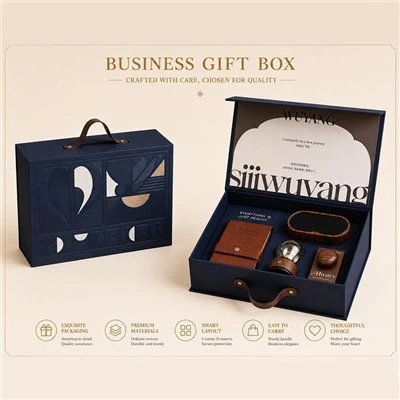
If you’re a business owner looking to send client gifts that are both meaningful and tax-efficient, or you’re curious about how an industry-specific gift box series can work for your business, get in touch. We can customize a box that fits your industry, your budget, and your tax needs, no hassle. You don’t have to figure this out alone.
Book-style Box Series References:
- U.S. Internal Revenue Service. (2023). Business Gift Deductions. Publication 535: Business Expenses.
- Canada Revenue Agency. (2024). Allowable Business Expenses: Gifts and Entertainment.
- HM Revenue & Customs (UK). (2023). Corporation Tax: Business Gifts.
- Australian Taxation Office. (2024). Deductions for Business Gifts.
Zhengzhou Lingpao Packaging Products Co., Ltd.
As one of the most professional industry-specific gift box manufacturers and suppliers in China, we’re featured by quality products and good service. Please rest assured to wholesale customized industry-specific gift box made in China here from our factory. Contact us for quotation and free sample.
Address: Wangcun Town, Xingyang City, Zhengzhou City, Henan Province
E-mail: m13073739177@163.com
WebSite: https://www.lingpaopackaging.com/
