If you’ve ever worked in industries like aerospace, medical devices, semiconductor manufacturing, or even oil and gas, you’ve probably interacted with metal bellows without even noticing these tiny (or not-so-tiny) flexible metal tubes do a lot of heavy lifting. As someone who’s been supplying metal bellows for over a decade, I can’t tell you how many times customers come to me with a vague request: “I need a flexible metal part.” And when I dig in to ask what exactly that part has to do—like how much it has to stretch, what chemicals it’ll touch, or how hot it’ll get—I see the lightbulb click for them. Designing a metal bellows isn’t just picking a shiny metal tube; it’s balancing a dozen tiny, sometimes conflicting factors that can make or break their whole project. Let’s break down what actually affects these designs, from the materials we choose to the weird, specific use cases I’ve seen over the years. Metal Bellows
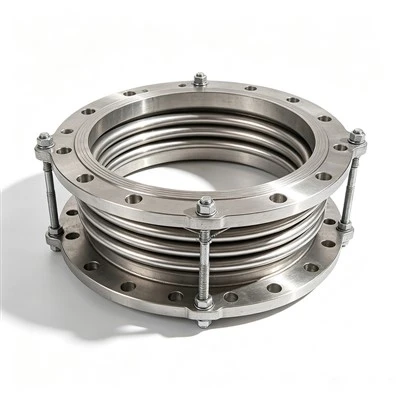
First up, and probably the most obvious but also most underrated one: the operating environment. I once had a customer from a semiconductor fab come to me panicking because their original bellows were failing after 20 uses. Turns out, those bellows were sitting in a chamber with super-corrosive plasma gases—something their old supplier had just used basic stainless steel, like 304, and it was eating through the walls. That’s the thing about operating environments: it’s not just temperature, it’s chemicals, pressure, even the presence of radiation or vacuum levels. For high-heat stuff, like exhaust systems or furnace components, we’ll use things like Inconel or Hastelloy—these nickel-chromium alloys don’t warp or crack when you’re dealing with temps up to 1,800°F, way higher than 304 stainless can handle. If it’s a medical device, like a catheter or a surgical tool, we have to use biocompatible materials, like 316L stainless or titanium—no funky leaching metals allowed, and they have to hold up to being sterilized with ethylene oxide or autoclaving, too. And if it’s a deep-sea oil application? We’re thinking about saltwater corrosion, high hydrostatic pressure, and even the risk of being exposed to harsh drilling fluids—so we go with materials that don’t rust through after a few dives, like 316L or even duplex stainless steel. One quick tip here: don’t assume a material that works for your buddy’s project will work for yours. I’ve had customers skip this step and come back to me for emergency replacements after a month, which nobody wants.
Next, performance requirements are huge, and they’re way more nuanced than “how much can it stretch.” Let’s start with movement: metal bellows do three main things, right? Axial movement (stretching out or squishing in), lateral movement (side-to-side wiggle), and angular movement (twisting at an angle). For example, a bellows connecting two pipes that have to move a lot from thermal expansion will need a high axial flexibility—so we make the convolutions (those little ripples along the bellows) wider and thinner. But wait, if that same bellows has to hold pressure, making the convolutions too thin will make it bulge or leak. So that’s the first balance: flexibility vs. pressure retention. I had a customer working on a rocket fuel line once—they needed it to flex a lot during launch vibrations, but also hold 2,000 PSI of fuel pressure. We had to tweak the convolution height and wall thickness until it hit that sweet spot. Then there’s cycle life: how many times does it need to move before it’s toast? A medical bellows in a surgical tool might only need 10,000 cycles, so we can go with a thinner wall. But a bellows in a factory’s automated assembly line that moves 10 times a minute, every single day, for 10 years? That’s 5 million cycles at least—so we have to use a thicker wall, or even a different alloy, to prevent metal fatigue cracks. Fatigue is a big one here—metal that bends a lot eventually cracks, just like a paperclip that you bend back and forth too many times. We use finite element analysis (FEA) to map out where those stress points are, but sometimes we still adjust the convolution shape to spread the stress around, so it doesn’t crack early.
Then there’s pressure and vacuum ratings. This is another area where I see customers make mistakes all the time. Pressure isn’t just “it has to hold pressure”—it’s internal pressure (like fluid inside the bellows pushing out) and external pressure (like the bellows being squeezed from the outside, like in a vacuum line or deep water). For high internal pressure, we increase the wall thickness of the bellows, or sometimes go with a higher-strength alloy. But if it’s a vacuum application—like a semiconductor vacuum chamber, where the bellows has to hold a super-low pressure on one side—we have to make sure there are no tiny crevices where gas can get trapped, which would ruin the vacuum. That means we polish the inside of the bellows extra smooth, and sometimes we use a welded seam instead of a brazed one, just in case the braze leaves a tiny gap. I once had a customer who skipped the smooth inside for a vacuum bellows, and their chamber had residual gas that messed up their wafer production for three months. They ended up reworking all the bellows, so that was a costly mistake they won’t make again.
Size and dimensional constraints might seem simple, but trust me, they can get weird. A lot of customers come to us with a specific space in their machine—like a 2-inch gap between two parts—and they need the bellows to stretch to 4 inches, but also fit into that tight gap when compressed. So we have to calculate the minimum and maximum length when compressed and extended, as well as the outer diameter, inner diameter, and even the wall thickness to make sure it doesn’t rub against other parts. For tiny bellows—like the ones used in microfluidic devices, which are less than 10mm in diameter—we have to use specialized machining and forming techniques, because making consistent, tiny convolutions is way harder than making a 1-foot-wide bellows for a pipe. And for large bellows, like the ones used in wind turbines for blade pitch control, we have to make sure they’re lightweight but still strong enough to handle the wind loads—so that means balancing material strength with weight, which is a whole other design puzzle.
Manufacturability is a factor that a lot of non-engineers forget about. Even if you have the perfect design on paper, if we can’t actually make it without it costing an arm and a leg or having defects, it’s useless. For example, if you want a bellows with really complex, irregular convolutions, we might have to use hydroforming instead of the standard mechanical forming process—hydroforming uses high pressure to shape the metal, which gives more control over the shape but is more expensive. If you need a bellows that’s welded from multiple pieces, we have to make sure the welds are strong and don’t have porosity, which can cause leaks. And for high-volume orders, like 10,000 bellows for a consumer appliance, we design them to be as easy to mass-produce as possible, while still meeting your performance specs. I always tell customers to be realistic about how many they need—if you only need 10 custom bellows for a prototype, we don’t need to tool up for mass production; we can hand-form them, even if it’s a bit pricier per unit. But if you need 100,000, we’ll optimize the design for our automated equipment to keep costs down long-term.
Regulatory and industry standards can’t be ignored either, depending on what you’re using the bellows for. In aerospace, you have to meet NASA or FAA standards for materials and performance—no shortcuts, because a failed bellows on a rocket is a big problem. For medical devices, it’s FDA regulations, which cover everything from material biocompatibility to cycle testing to traceability of every metal batch. In the food and beverage industry, you have to meet FDA food contact standards, so no materials that can leach into food. I once had a customer working on a food processing line get denied by the FDA because their old bellows had a coating that wasn’t food-safe—we had to re-design it with a bare stainless steel bellows that met the standards, which took a bit of extra work, but it was worth it to get them compliant.
Wait, and I can’t forget about cost, but not in the way you might think. It’s not just “get the cheapest bellows possible”—it’s total cost of ownership. A cheap bellows from a no-name supplier might cost 50% less upfront, but if it fails in 6 months, that’s downtime, replacement costs, even lost revenue if your whole line is shut down. I’ve seen that happen way too many times. For example, a factory that made car parts used cheap bellows for their hydraulic lines, and the bellows failed every 3 months, costing them $10,000 each time in downtime. They switched to our bellows, which cost a bit more upfront, but they last 2 years, and the total cost was way lower. So when we talk cost, we’re not just talking material and production—we’re talking about what it will cost you over the life of your project.
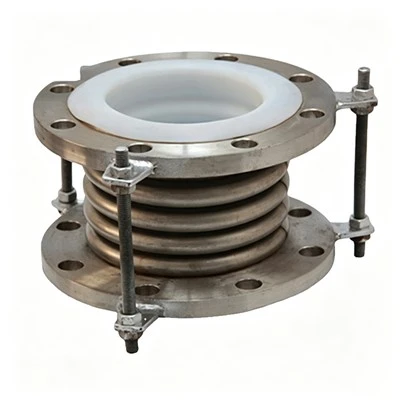
Let me give you a real example to tie all this together. A few months back, a customer from a medical device startup came to me. They needed a bellows for a new insulin pump that would move insulin from the reservoir to the injection site. Requirements: biocompatible material, 5,000 cycles (since someone uses the pump every few minutes, for 5 years), fits in a tiny 15mm space, and won’t leach any chemicals. Their first design used 304 stainless steel, which we told them wasn’t biocompatible enough for medical use—so we switched to 316L stainless, which has low carbon content so it doesn’t leach. Then their original convolution shape had too much stress at the base, so it would only last 2,000 cycles. We adjusted the convolution height and rounded the stress points, bringing it up to 6,000 cycles, which was more than enough. And we polished the inside extra smooth to make sure insulin wouldn’t get trapped, which was a big concern for their regulatory team. They ended up going with our design, and they’ve been using them for their pump now for over a year, no issues.
Elastic Components At the end of the day, designing a metal bellows is all about tradeoffs. You can’t have maximum flexibility, maximum pressure rating, maximum cycle life, and a tiny size all at the same time—you have to pick what’s most important for your use case, then adjust the design to fit. That’s why it’s so important to work with a supplier who actually knows these factors inside and out, not someone who just sells standard bellows off a shelf. If you’re working on a project right now where you need a custom metal bellows, or you’re having issues with existing ones failing, don’t guess at the design. Reach out and tell me what you need, what environment it’ll be in, and what performance you require—we can work through all these factors together to get you a bellows that works, fits, and lasts. No generic solutions, no last-minute surprises, just a bellows that does exactly what you need it to.
References
- Engineering Design Handbook: Metal Bellows Technology. US Department of the Army, 1998.
- ASME Boiler and Pressure Vessel Code, Section VIII: Pressure Vessels. American Society of Mechanical Engineers, 2023.
- "Metal Bellows Fatigue Life Prediction: A Review." Journal of Mechanical Design, Vol. 142, No. 5, 2020.
- ISO 10993: Biological Evaluation of Medical Devices. International Organization for Standardization, 2019.
- "Corrosion Resistance of Nickel Alloys in Harsh Environments." Corrosion Science, Vol. 167, 2020.
Yixing Blog Pipeline Equipment Co., Ltd.
As one of the most professional metal bellows manufacturers and suppliers in China, we’re featured by quality products and good service. With abundant experience, we warmly welcome you to wholesale bulk metal bellows in stock here and get quotation from our factory. Customized orders are welcome.
Address: Zhizao Park, No.50 Chunjiang Road, Industrial Cluster Zone, Heqiao Town, Yixing City, Wuxi City, Jiangsu Province
E-mail: 1351116816@qq.com
WebSite: https://www.blogbellows.com/
