Hey everyone, let’s cut to the chase: if you’ve ever stood next to one of our mobile power plants at a construction site, a disaster recovery zone, or a remote music festival, you might’ve wondered—can these bad boys actually run on solar power? And as a mobile power plant supplier, I get this question all the time, so I’m here to break it down straight, no jargon, no fluff, just real talk from someone who’s spent years tweaking these units for all kinds of jobs. Mobile Power Plant
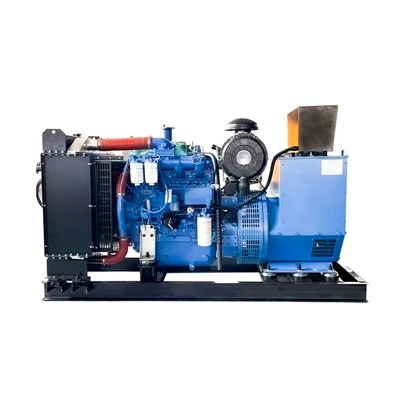
First, let’s get one thing out of the way: what’s a mobile power plant, anyway? It’s not your basic portable charger you toss in your backpack. We’re talking about rugged, trailer-mounted units (or skid-mounted, for tighter spaces) that crank out enough juice to power a full construction crew’s tools, a mobile hospital’s refrigeration for vaccines, or a festival’s stage and food trucks. Traditionally, most folks know them as diesel or gas-powered, which makes sense—they’re easy to fuel, deliver consistent power, and work anywhere, no extra gear needed. But solar? That’s the new kid on the block, and honestly, it’s changed the game for a lot of our clients.
Now, can they run on solar? The short answer is: yes, but it’s not as simple as slapping a couple of panels on a trailer and calling it a day. There’s a lot more to it, and that’s why we’ve been engineering our units to integrate solar seamlessly over the past few years. Let’s dive into the real science here, because I know a lot of you reading this (our contractors, emergency response teams, event planners) don’t care about lab tests—you care about does it work when I need it, right?
First, the big hurdle with solar for mobile power: consistency. The sun doesn’t shine 24/7, and if you’re in a spot with heavy clouds or winter days with short daylight, solar alone might not cut it. That’s where our hybrid design comes in. We don’t do pure solar mobile plants (not yet, anyway)—we pair high-efficiency solar panels with a lithium-ion battery bank and a small, reliable backup generator. Wait, let’s break that down step by step.
The solar panels themselves: we use monocrystalline panels, the ones with the black cells that hit 22-25% efficiency, way better than the old school poly panels you see on a house roof. For a typical 50kW mobile plant, we can fit about 150 of those panels on a 40ft trailer—enough to generate roughly 75,000 watt-hours of power on a perfect, sunny day. That’s not chump change: that’s enough to power 10 average homes for a full day, or run a 50-ton AC unit, all the drills and saws on a mid-sized construction site, and the site’s lighting. But here’s the catch: that’s only if the sun is beating down directly. If it’s a cloudy day, that drops to like 30% of that output, so you can’t run the whole plant on solar alone.
That’s why we add the battery storage. Our battery banks are modular, so we can size them to match your needs—from 100kWh for small jobs up to 500kWh for big construction or disaster response. The batteries store all that extra solar power during the day, so you can use it at night, or when it’s overcast. We also use smart inverters that automatically switch between solar, battery, and generator mode, no manual work needed. If the battery runs low, it kicks on the backup generator—we usually spec a small diesel or propane generator here, since propane burns cleaner and is easier to store in remote areas than diesel, plus it has a longer shelf life.
Wait, let’s test this with a real scenario, because that’s what matters. Last year, we delivered a solar-hybrid mobile power plant to a wildfire recovery site in Northern California. The site was 12 miles from the nearest grid, and they needed to power a mobile command center, two refrigerated vaccine units, and a crew of 20 working 12-hour shifts. On sunny days, the solar panels generated enough power to cover 80% of their daily needs—they only ran the generator for 2 hours at night, instead of 8 hours like they would have with a pure diesel plant. That saved them like 400 gallons of fuel in the first month alone, which was a huge win for their budget and their carbon footprint. On the cloudy days, the battery bank took over, and they only ran the generator for an hour or two to top up the batteries. It worked flawlessly, and the crew there told us it was way quieter than their old diesel units, which made it way better for sleeping near the site.
But here’s the thing: solar isn’t for every mobile power plant job. If you’re working in a remote, arctic construction site where the sun only shines 3 hours a day in winter? Solar probably won’t be your main power source—you’d stick with a diesel or propane unit. Or if you need a power plant that’s super compact for a backpacking crew (though we do make smaller ones for that too), pure solar might work, but for industrial-scale mobile plants, it’s all about that hybrid mix.
Now, let’s talk about why so many of our clients are asking for solar options lately. It’s not just about being green—though that’s a big plus. Fuel costs have gone nuts over the past few years, so a lot of contractors are realizing that solar cuts their fuel bills by 50-70% during peak season. For event planners, solar-hybrid plants are way quieter, so they don’t have to deal with noise complaints from local residents or festival-goers. And for emergency response teams? After a hurricane or tornado, grid power is down for days, sometimes weeks. A solar-hybrid mobile plant doesn’t need to refuel as often, which means less time waiting for fuel trucks to get to the disaster zone, and more time keeping hospitals, shelters, and communication towers running.
Wait, let’s address some of the myths we hear all the time. Myth #1: Solar-powered mobile power plants are way more expensive than diesel ones. Yeah, upfront costs are higher—panels and batteries aren’t cheap. But over 5 years, the total cost of ownership is way lower. We had a construction client in Texas who ran a solar-hybrid plant for a year, and he told me he saved $18,000 on fuel compared to his old diesel unit. That covers the extra cost of the solar setup in less than 2 years. Myth #2: Solar panels on mobile plants are too fragile, they’ll get damaged on the road. We solve that with reinforced panels—we use frames that can handle being hauled down bumpy dirt roads, and we test every unit by driving it over curbs, hitting it with debris, and simulating 50mph winds before it leaves our lot. We’ve had units go through dust storms, heavy rain, and even a hailstorm in Oklahoma, and the panels still work.
Another thing: we’re always tweaking this tech. Right now, we’re testing a pure solar mobile plant for smaller jobs—think 10kW units for small construction sites, camping resorts, or temporary power for outdoor weddings. We’re also working with better batteries that charge faster and hold more power, so in a year or two, we can offer pure solar options for mid-sized jobs too. The goal isn’t to replace diesel entirely—it’s to give our clients options, so they can pick what works best for their specific job.
Now, if you’re reading this and wondering if a solar-powered mobile power plant is right for you, let’s talk about the key factors to consider. First, how much power do you need? If it’s less than 50kW, pure solar might work, but for anything bigger, hybrid is the way to go. Second, how much sunlight does your location get? If you’re in Arizona, Florida, or Southern Europe, solar will knock it out of the park. If you’re in Alaska or Northern Canada, you’ll need a bigger battery and more backup generator. Third, how long do you need the power? If it’s a short-term job (a week-long festival), the hybrid setup is perfect. If it’s a 6-month construction project, solar will save you way more money.
At the end of the day, as a mobile power plant supplier, our job isn’t to tell you that solar is the only answer—it’s to tell you that yes, it can work, and it works really well for a lot of different jobs. We’ve installed over 200 solar-hybrid units in the last 3 years, and every single one of our clients has told us they’d choose solar again for their next project. The proof is in the numbers, and the real-world use cases.
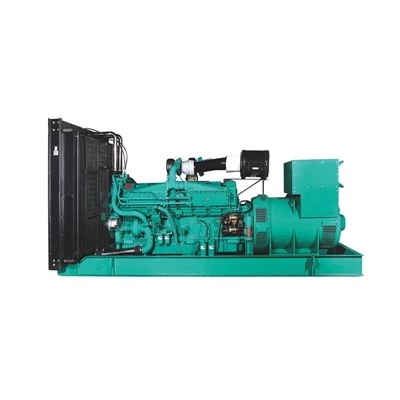
If you’re in the market for a mobile power plant—whether you’re a contractor, event planner, emergency response team, or anyone who needs reliable, portable power—we can help you figure out the right setup for your needs. We don’t do one-size-fits-all units; every plant we build is tailored to how you’re going to use it. Reach out to us to chat, no pressure, just straight talk about what will work for you. We’ve got the experience, the gear, and the team to make it happen, and we’re here to help you power whatever project or event you’ve got coming up.
Silent Type Generator Set References
- International Energy Agency. (2023). Global Solar Power Technologies Report.
- National Renewable Energy Laboratory. (2022). Hybrid Solar-Battery-Generator Systems for Remote Power Applications.
- Construction Industry Institute. (2023). Off-Grid Power Solutions for Commercial Construction Sites.
- International Organization for Standardization. (2021). Standard for Mobile Power Plant Durability and Performance Testing.
- Federal Emergency Management Agency. (2022). Mobile Power Units for Disaster Response Operations.
Weifang Bofa Power Equipment Co., Ltd.
We’re well-known as one of the best mobile power plant suppliers in China. With a professional production team, we are able to meet the needs of the majority of our customers. Please feel free to buy cheap mobile power plant for sale here from our factory. For price consultation, contact us.
Address: Lianhuachi Village, Fangcheng Street Office, Fangzi District, Weifang City, Shandong Province.
E-mail: sales@wfbofapower.com
WebSite: https://www.wfbfgenset.com/
