If you’ve ever worked with laser-based precision tools—whether for manufacturing, medical devices, or consumer electronics—you’ve likely encountered multi-beam laser modules. As someone who’s spent the last seven years supplying these modules to industries ranging from automotive to semiconductor packaging, one question I field more than any other is: Do these multi-beam systems actually produce heat? The short answer is yes—but the real story is far more nuanced than a simple “yes” or “no.” It’s a question that balances physics, engineering, and the practical constraints of delivering consistent, high-performance laser power without sacrificing reliability. Let’s break this down, straight from the perspective of someone who talks to engineers and production managers about this every single week. Multi-Beam Laser Modules
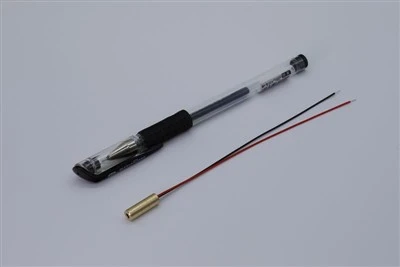
First, let’s ground this in basic optics and thermodynamics to avoid the vague jargon that muddles so many laser conversations. All laser diodes, regardless of whether they emit a single beam or multiple, convert a portion of the electrical power they consume into laser light. The remaining power is lost as heat. That’s the principle of electroluminescence: when current flows through the diode’s semiconductor material, only a fraction of the charge carriers recombine to produce photons (laser light); the rest release their energy as heat, mostly in the form of vibrational energy in the semiconductor lattice. For a standard single-mode laser diode, that conversion efficiency hovers around 30-50%—meaning 50-70% of the input power becomes heat. Multi-beam modules, by their nature, house multiple laser diodes in a single compact package, so they’re not immune to this fundamental physical law. In fact, if you cram four, eight, or even 16 high-power diodes into a space the size of a postage stamp, that heat has nowhere to go if the module isn’t engineered properly.
I learned this the hard way early in my career. Back in 2017, a customer in the automotive industry reached out to us with a problem: their initial custom multi-beam module we’d supplied for welding battery tabs was overheating, leading to beam drift that caused 12% of their parts to fail inspection. They were running 8 beams at 5W each, for a total of 40W of laser power, and the module’s internal temperature was spiking to 85°C during 10-hour production runs. The engineering team they’d worked with before didn’t account for the heat density of multi-beam systems—each diode has its own thermal footprint, and when you stack them closely, their individual heat signatures overlap, creating hotspots that are much harder to dissipate than a single diode’s heat. We had to go back to the drawing board that week, reworking the module’s thermal design to use a micro-channel heat sink integrated directly into the module’s base, and adding thin-film thermistors inside the package to monitor individual diode temperatures in real time. That fix cut their operational temperature by 32°C, and their failure rate dropped to less than 1%. That experience taught me that heat isn’t just a “side effect” of multi-beam modules—it’s the single biggest factor in their long-term performance, reliability, and lifespan.
But here’s the part that surprises a lot of people: not all heat in multi-beam modules is bad. The key is how you manage it. Let’s distinguish between two types of heat that these systems generate: parasitic heat and controlled heat. Parasitic heat is the excess energy from inefficient diode operation that serves no purpose. Controlled heat is the minimal, consistent heat that helps stabilize the semiconductor’s bandgap— the energy level that determines the wavelength of the laser light. If a diode’s temperature fluctuates more than a few degrees, its wavelength shifts, which can cause issues for applications that require precise spectral alignment, like fiber optic communication or medical laser surgery. For example, a 1°C shift in a 980nm pump laser diode can change its wavelength by about 0.2nm, which might sound trivial, but it can lead to significant signal loss in long-distance fiber links. So a small, managed amount of heat isn’t just unavoidable—it’s often beneficial for consistent performance.
That’s why modern multi-beam laser module suppliers, myself included, don’t just design for heat dissipation—we design for heat uniformity. For the automotive battery welding customer I mentioned earlier, it wasn’t enough to pull heat out of the package; we needed to make sure every single beam operated at the same temperature, so their beam alignment stayed consistent across thousands of welds. We use a few core strategies to do this, and they’re the same ones we apply to every module we ship, whether it’s for a medical device, a 3D printer, or a semiconductor lithography tool. First, we use high-efficiency laser diodes that push conversion efficiency up to 55% or higher. That cuts the amount of heat generated per diode by nearly a third compared to standard diodes, so even with 16 beams, the total heat output is manageable. Second, we integrate a unified thermal substrate made from copper-tungsten or diamond-like carbon, which have exceptional thermal conductivity, to spread heat evenly across all the diodes. No more hotspots where one diode runs 10°C hotter than the rest. Third, we build in closed-loop temperature control systems, either internal thermistors or external cooling loops, that adjust current to individual diodes if their temperature deviates from the setpoint. That’s how we keep beam alignment stable even during 24/7 operation.
Another common question I get: How does the heat from multi-beam modules compare to using multiple single-beam modules? It’s a fair question, because some engineers assume that running four separate single-beam modules would generate less heat than one multi-beam unit. But that’s not true, and the difference boils down to packaging efficiency. If you mount four single-beam modules side-by-side, each with its own heat sink, you’re adding extra thermal resistance between each diode and the ambient environment. The multi-beam module, by contrast, packs diodes into a tighter space on a shared thermal substrate, so the heat can escape more efficiently. I’ve run the numbers for a customer in electronics assembly who was switching from four 10W single-beam modules to one 40W multi-beam module. Their total input power for the single-beam setup was ~80W, so heat output was ~48W (assuming 40% efficiency). The multi-beam module, with 52% efficiency, used ~77W of input power and produced only ~37W of heat. Even when you account for the slightly smaller heat sink on the multi-beam unit, their operating temperature was 18°C lower than the single-beam setup. That’s not a fluke—it’s a result of intelligent packaging and thermal design, which is where a lot of low-cost suppliers cut corners.
That’s also why I always advise customers to be wary of suppliers that quote low prices without providing thermal performance data. A few years ago, a startup came to us looking for a 8-beam module for their 3D printing project. They’d gotten a quote from a supplier overseas that was 40% cheaper, and they were ready to pull the trigger until we looked at the specs together. The overseas supplier’s module listed a total power output of 40W, same as our offering, but their conversion efficiency was only 32%. That meant their total heat output was ~27W, compared to our ~19W. More importantly, their thermal substrate was made of aluminum, which has 1/4 the thermal conductivity of copper-tungsten. We ran a simulation of their module operating at full power in a 25°C ambient environment, and predicted the internal diode temperature would hit 92°C after just 2 hours. That would cut the module’s lifespan from an estimated 50,000 hours to less than 5,000 hours—meaning they’d have to replace the module every few months, which would cost them far more in downtime and replacements than the initial savings from the cheap supplier. In the end, they went with our module, and three years later, they’re still using it with no issues.
Of course, there are limits to what we can do with heat management, and those limits depend on the application. For low-power multi-beam modules used in things like bar code scanners or small 3D printers, heat isn’t a major concern because the total power is low—usually 1W to 5W total. Those modules can even passively dissipate heat through their own casing without needing a separate cooling system. But for high-power applications, like welding thick metal or lithography for semiconductor chips, you have to actively cool the module with fans, water cooling, or thermoelectric coolers (TECs). The key is matching the cooling solution to the application’s duty cycle and power requirements. For example, a module used in a production line that runs 24/7 needs a more robust cooling system than one used in a lab that runs 8 hours a day.
I want to be clear: I’m not saying that multi-beam laser modules never have heat-related issues. No laser system is perfect, and if they’re not designed or installed correctly, heat can cause all kinds of problems. Beam drift, reduced lifespan, inconsistent performance, even permanent damage to diodes—all of these can happen if heat isn’t managed properly. But that’s not a flaw of multi-beam technology itself—it’s a flaw in bad engineering. As someone who’s been doing this long enough to see dozens of modules fail (and dozens more operate perfectly for years), I can tell you that the best multi-beam systems on the market are designed with heat as a core consideration from day one, not as an afterthought.
If you’re working with multi-beam laser modules and you’re dealing with heat-related challenges, or if you’re in the market for a custom module for your application, I’ve worked with teams across every major industry to solve these exact problems. We don’t just sell a pre-made module and walk away—we work with you to design a system that accounts for your power needs, duty cycle, ambient conditions, and performance requirements, with thermal engineering built in every step of the way. We’ve solved heat-related issues for automotive battery welding lines, medical laser surgical tools, and semiconductor lithography tools, and we’re ready to help you too. If you’re ready to discuss your needs and find a multi-beam laser module that’s optimized for your application’s heat management needs, get in touch with our team today to start a conversation about your project.
Uniform Line Laser Modules References
- IEEE Journal of Quantum Electronics, "High-Efficiency Multi-Beam Laser Diode Arrays for Industrial Applications" (2021)
- Optics Express, "Thermal Management Strategies for High-Power Multi-Beam Laser Modules" (2019)
- Laser Institute of America, "Practical Guide to Laser Diode Reliability and Thermal Design" (2020)
- International Journal of Advanced Manufacturing Technology, "Performance Optimization of Multi-Beam Laser Welding Systems" (2022)
- Electronics Cooling, "Thermal Challenges in Compact Multi-Beam Laser Packaging" (2018)
Changshu Desheng Optics Electronics Co., Ltd.
As one of the most professional multi-beam laser modules manufacturers and suppliers in China, our products have good reputation in the market. Please feel free to buy advanced multi-beam laser modules for sale here from our factory. Good service and quality products are available.
Address: 8A, Yineng science and technology industrial park, No.183, Yinhe Road, Southeast Development Zone, Changshu, Jiangsu Province, China.
E-mail: desheng1@dershinelaser.com
WebSite: https://www.ds-lasers.com/
