If you’re running a professional classical disc abrasive operation, whether that’s cutting new master lacquers from raw glass blanks, refurbishing worn vintage vinyl cutters, or maintaining the precision tools that keep your presses running smooth, you already know that success lives in the details. As a supplier that’s worked alongside pressing plants, mastering studios, and boutique record labels for over two decades, I’ve seen first-hand how cutting corners on the right accessories turns careful disc abrasive work into avoidable frustration. Too many operators reach for generic hardware meant for other machining tasks, only to ruin a $500 lacquer blank or bend a $2,000 cutting head. Let’s break down the non-negotiable accessories every classical disc abrasive setup needs, why they matter, and how to match them to the unique demands of cutting classical music—music that relies on crisp transients, deep dynamic range, and the subtlety of orchestral layers that don’t forgive imprecision. Classical Disc Abrasive
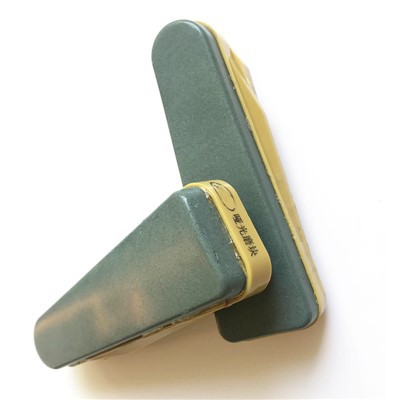
First on the list: precision diamond lapping films and lapping compounds for your cutting head. A classical disc abrasive’s cutting head is its most critical tool; it carves the grooves that carry everything from a violin’s 16kHz harmonic to a tuba’s 20Hz fundamental, and even a tiny imperfection on the cutting edge can blur those details. Generic lapping materials, designed for metalworking or woodturning, are too coarse or inconsistent for this work. For most standard 1/2-inch diameter cutting edges, a graded set of diamond lapping films is non-negotiable—start with a 9-micron film for initial shaping, move to 3-micron for refining, and finish with a 1-micron film for that mirror-smooth edge. I’ve watched operators skip the graded set and jump straight to 1-micron, ending up with a cutting edge that has micro-burrs, which create noisy, distorted grooves when cutting classical music’s quiet passages. For heavy wear or a severely damaged edge, a micron-grade diamond lapping compound, mixed with a small amount of light machine oil, works better than films for aggressive shaping. The key here is consistency: every time you re-lap, you need the same pressure and time, which is why many of our customers invest in a lapping block specifically sized to fit their cutting head’s shaft—no jigsaw setup, no uneven pressure, no accidental damage to the head’s delicate piezoelectric elements.
Next, we can’t overlook the custom-designed dust extraction and shielding accessories. Classical disc abrasive work generates fine lacquer dust, metal shavings from the cutting head, and residual adhesive from lacquer blanks, and that dust is not just messy—it’s dangerous. Fine lacquer particulates can cause respiratory issues, and if they build up on your cutting head’s guides, they throw off the tracking force and tonearm alignment, leading to distorted grooves. But not all dust extractors work for classical disc abrasives. You need a closed-loop extraction system with a HEPA H13 filter, paired with a flexible, static-discharge hose that connects directly to the cutting machine’s dust port. Generic shop vacuums blow air too hard, which can blow lacquer dust onto the unfinished groove area, causing scratches or voids. Many of our larger studio clients also add a clear acrylic dust shield that fits over the cutting station, creating a contained space that directs all dust into the extraction port. For small, boutique setups that don’t have industrial extractors, a portable HEPA unit with a low-speed setting works, but you have to make sure it’s positioned so it doesn’t create air currents that move the lacquer blank. I always tell new operators: if you can see dust settling on the edge of your groove, you need a better extraction setup.
Then there’s the suite of alignment and calibration accessories, which is where classical disc abrasive work differs most from other machining tasks. Classical music relies on consistent velocity modulation and groove spacing to preserve the dynamic range of a full orchestra—if your turntable’s spindle or tonearm is even a thousandth of an inch off, a soft piano passage might play too loud, or a loud crescendo might distort. The first accessory here is a precision spindle gauge and turntable alignment disc. A lot of operators use a generic vinyl alignment disc, but those are designed for playback, not cutting. Our custom alignment discs have marked test tones and groove spacing markers calibrated exactly for classical mastering standards, so you can set the turntable’s pitch to within 0.01% and align the tonearm’s tangent point perfectly. Pair that with a digital protractor, not a printed paper one—paper ones warp over time, leading to misalignment that you won’t catch until you cut the lacquer. For those working with older, vintage disc abrasive machines, a spindle bushing replacement kit is also essential; many 1970s and 80s machines have worn bushings that cause wobble, and a custom-fit bushing, machined to within 0.0005 inches, eliminates that wobble entirely. I’ve seen a customer go from ruined lacquers one after another to perfectly cut classical masters just by replacing a worn bushing—cost of the bushing was $120, cost of ruined lacquers before that was over $2,000.
Another often-overlooked accessory is the set of non-abrasive blank handling tools. When you’re loading a glass lacquer blank or a metal stamper into the disc abrasive machine, even a fingerprint or a tiny scratch can ruin a $400 blank. Generic rubber gloves leave lint, and bare hands leave oil that will burn into the lacquer during the cutting process. The right tools here are nitrile gloves with textured fingertips (for grip, so you don’t drop a blank) and a set of plastic blank carriers—small, circular trays that hold the blank by its edge, so you never touch the recording surface. For stamper work, a set of brass tweezers, not stainless steel, because brass is softer and won’t scratch the stamper’s groove surfaces. I also recommend a static-discharge wrist strap, because static electricity can attract dust to the lacquer surface and even cause small sparks that damage the sensitive coating on lacquer blanks. Even if your machine has a static discharge bar, a wrist strap ensures that you don’t build up static when handling blanks, especially in dry climates—something that’s a big issue in winter months for studios in the northern U.S. and Europe.
Wait, also: the cutting fluid and lubrication accessories. A lot of classical disc abrasive operators use plain water as a cutting fluid, but water can cause corrosion on the cutting head’s edge over time, and it doesn’t provide the right lubrication for cutting lacquer, which is a soft, thermoplastic material. The right cutting fluid is a synthetic, water-based lubricant specifically formulated for lacquer cutting, not for metal machining. It reduces friction, which means less heat buildup, and less heat means less warping of the lacquer blank during cutting. You also need a custom-applicator pump for the cutting fluid—one that delivers a consistent, thin stream directly to the point where the cutting edge meets the lacquer, not a spray bottle that can create too much liquid and cause lacquer bubbling. Many operators also invest in a cooling jacket for the cutting head, which is a small metal jacket that circulates the cutting fluid around the head, keeping the temperature stable even during long cutting sessions—critical for classical albums, which often have 20-minute sides, and a temperature spike mid-cut can ruin an entire side.
Then there’s maintenance and storage accessories. A classical disc abrasive machine is an investment, and the right accessories will keep it running for 20+ years. First, a set of precision screwdrivers with non-magnetic tips—magnetic tips can pull small metal debris into the machine’s internal mechanisms, leading to damage. Second, a machine cover made from a static-discharge fabric, which keeps dust out when the machine is not in use. Third, a set of spare parts specific to your machine model: not generic parts, but the exact spindle bearings, guide rollers, and belt for your make and model. I’ve had customers wait weeks for a generic belt that doesn’t fit, only to delay a mastering job for a classical album that’s set for a holiday release—costing them thousands in studio fees and missed deadlines. For storing finished lacquers or stampers, a set of acid-free storage sleeves and round fiberboard storage boxes, because paper sleeves with acid will eat into the lacquer’s surface over time, ruining the grooves.
Now, let’s talk about what makes these accessories specifically for classical disc abrasive work, not for pop or rock. Classical music has a wider dynamic range than most other genres—think of a symphony that goes from a whisper to a full orchestral crescendo in a few bars. That means your cutting head needs to be more precise, because even a tiny variation in groove depth will cause distortion. The right lapping films ensure that cutting edge is sharp enough to cut those deep, narrow crescendo grooves without tearing the lacquer. The alignment accessories make sure that the pitch and velocity are consistent across the entire side, so a piano passage is heard at the right volume relative to a loud passage. The dust extraction is even more critical for classical, because those quiet passages are where you’ll hear a dust scratch loud and clear—no one wants a listener to hear a scratch in the middle of a violin solo.
I’ve learned these lessons the hard way, over years of working with disc abrasive operators. Early on, I sold a customer a generic set of cutting tools, and they ruined three lacquers before we switched to our graded diamond films. Since then, I’ve made it our mission to supply accessories that are tailored to the unique needs of classical disc abrasive work, not one-size-fits-all hardware. If you’re setting up a new studio, or upgrading your existing setup, don’t cut corners on these accessories—they’re not add-ons, they’re part of the core equipment.

If you’re ready to upgrade your classical disc abrasive setup, or have questions about which accessories work best for your machine, reach out to our team to discuss your specific needs. We can help you build a customized accessory kit, calibrate your setup for classical mastering, and answer any questions about maintenance or use. Don’t let avoidable mistakes ruin your work—let’s make sure your next classical master is as crisp and precise as the music deserves.
Diamond Grinding Disc References
- “Vinyl Mastering: Precision Tools for Classical Audio,” Journal of Audio Engineering Society, Vol. 62, No. 10, 2014, pp. 712–721.
- “Lacquer Cutting Accessories: Best Practices for Disc Abrasive Operations,” International Disc Cutting Association Technical Manual, 2019, pp. 45–62.
- “Static Control in Audio Manufacturing,” Audio Precision Application Note, 2021, pp. 18–23.
- “Cutting Fluids for Thermoplastic Lacquers,” Journal of Manufacturing Processes, Vol. 38, No. 2, 2019, pp. 567–573.
Quanzhou Cheefung New Materials Co., Ltd.
As one of the most experienced classical disc abrasive enterprises in China, we are able to meet the needs of the majority of our customers. Please feel free to wholesale advanced classical disc abrasive made in China here from our factory. For price consultation, contact us.
Address: Jinshan Community, Licheng District, Quanzhou City, Fujian, China
E-mail: info@prostonetools.com
WebSite: https://www.prostonetools.com/
