If you’ve ever stood in front of a display case full of glass trophies—each one etched with a name, logo, or achievement—and wondered how such a simple object goes from a raw block of glass to a finished award, you’re not alone. As a glass trophy supplier who’s been in this business for over a decade, I get this question every day: “How much does a glass trophy cost?” The answer isn’t a single number, and it’s not as random as grabbing a price tag off a shelf. It’s the result of dozens of small, intentional choices we make at every step, from the moment the glass is ordered to the day it’s delivered to your door. Let me break this down, not just as someone who sells these trophies, but as someone who’s watched them come to life hundreds of times. Glass Trophy
First, let’s start with the basics: what is a glass trophy, anyway? It’s not just plain glass cut into a shape. Most of the ones we supply at our shop are made from optical-grade crystal glass, or high-quality soda-lime glass—two very different materials with different costs and qualities. Optical crystal is denser, clearer, and has that subtle sparkle you see in high-end awards. Soda-lime is more durable, less prone to scratches, and a little more affordable. That difference alone can shift a price by 20 to 30 percent, depending on the size. For example, a 6-inch optical crystal trophy might start at $25, while the same size in soda-lime runs $18. But that’s just the material. The real cost starts to add up when we get to shaping and customizing.
Size is one of the biggest factors. When a customer comes to us asking for a quote, the first question we ask is, “How big do you want it?” Not just height, but width and thickness too. A thin, flat 4-inch plaque is far cheaper than a 10-inch, thick-cut trophy with rounded edges. Why? Because thicker glass requires more material, more time on cutting tools, and more care to avoid cracking. We use CNC cutting machines, which are programmed to carve the exact shape a customer wants, but the longer the machine runs, the more labor costs add up. Last year, a local school ordered 50 8-inch trophies for their soccer team—those took about 10 minutes each to cut and polish, which was two hours of machine time total. Compare that to a custom 12-inch trophy for a corporate sales award, which took 22 minutes to shape on its own; that extra time translates directly to a higher price.
Then there’s customization, and this is where most of the hidden costs come in. No two glass trophies are the same; almost every one has a logo, name, date, or message etched onto it. The type of etching you choose changes everything. Laser etching is the most common for detailed images or text, but it’s not one-size-fits-all. A simple line of text might cost $2 per trophy, while a full-color logo with gradients (think a company’s brand that has red and blue shades) could add $5 to $10 per unit. We also offer sandblasting for deeper, more textured etchings, which is better for large batches but requires stencils that cost extra to design. Last quarter, a tech startup came to us needing 100 trophies with their full-color logo and a quote from their CEO. The etching alone took us an extra day of work, and that showed up in the final invoice. Even small details like adding a frosted edge or a polished base can add $3 to $7 per piece, depending on how many trophies we process.
Wait, but what about bulk orders? A lot of people assume if you buy 100 trophies instead of 10, the price per unit drops by 90 percent, but that’s not true. The cost savings do exist, but they’re more modest. For example, a 6-inch trophy might cost $18 each for 10 units, but that drops to $14 each for 50 units, and $12 each for 100. Why not bigger discounts? Because even with bulk orders, the material and customization costs don’t change much. Etching 100 logos takes the same amount of setup time as etching 10—you just have to run the machine more times. The only real savings come from being able to buy glass in larger quantities, which gets a lower price from our suppliers, and reducing the time spent on individual packaging. For small batches (under 20), we hand-wrap each trophy in bubble wrap and a custom box, but for 100 units, we can use automated wrapping that cuts labor time by half. That’s where the savings come from, not a steep per-unit discount.
I also have to mention hidden costs that customers often don’t think about: quality control and shipping. Glass is fragile, so every trophy has to be inspected for chips, scratches, or uneven edges before it leaves our shop. For small orders, that’s an extra 10 minutes per unit, but for large batches, we have two dedicated people who do nothing but check every trophy, which adds about $1.50 per unit in labor. Then there’s shipping. A 10-inch glass trophy is heavy, and it needs special packaging to make sure it doesn’t break. For customers within the country, standard ground shipping for a single trophy is $12, but for 50 trophies, it’s about $30 total—way cheaper per unit, but it’s still a cost that gets added to the total price. Last year, a client out west had 20 trophies shipped, and one arrived with a small chip on the edge. We had to remake it at no extra cost, which ate into our profit, but it’s part of the job. That’s why shipping is never free for small orders; we can’t afford to absorb that risk.
Now, let’s talk about what goes into a budget glass trophy versus a premium one. I don’t like to call them “cheap” because that makes them sound low quality, but budget options usually use thinner soda-lime glass, simple laser etching, and standard packaging. A 4-inch budget trophy might cost $10 to $12, perfect for a small company giving out employee pins or a school classroom party. Premium trophies, on the other hand, use thick optical crystal, hand-polished edges, full-color UV printing (instead of etching, which gives a more vibrant look), and even a custom engraved base. A 10-inch premium trophy can run $40 to $60, and sometimes more if it has extra features like LED lights inside the glass. I once did a custom trophy for a marathon that had LED lights along the base, which added $15 per unit because of the wiring and battery assembly.
I should also be clear about factors that don’t affect the price as much as you might think. The shape, for example, is mostly about cutting time. A round trophy takes about the same time as a square one of the same size. The color of the glass—most glass is clear, but we can get frosted or colored tinted glass, which adds $2 to $5 per unit, but that’s a small difference. The real variables are size, material quality, customization, and order quantity.
Over the years, I’ve seen customers get confused when two trophies look similar but have different prices. Last month, a customer came in with a quote from another supplier for a 6-inch optical crystal trophy. The other supplier’s price was $12, while our price was $18. He was shocked, but when I showed him the difference: the other supplier was using thinner glass that would scratch easily, their etching was a basic line engraving (not laser detailed), and they were shipping it in a generic bubble envelope, not a custom foam box. He ended up going with us because he knew we stood behind our work—no chips, no blurry etchings, and a full refund if he wasn’t happy. That’s the kind of trust that matters when you’re buying something that’s going to represent someone’s achievement.
So, if you’re planning to buy glass trophies, here’s my advice to get the best price for your needs. First, decide what’s important: do you need a high-end award for a top employee, or a budget one for a team of 50? Second, be clear about your customization: if you can use a simple text etching instead of a full-color logo, that will save you money. Third, buy in a quantity that makes sense—most of our repeat customers order 50 or more at a time, which gets the best balance of price and quality. And finally, talk to a supplier directly, not just a website. A good supplier will ask you questions about your needs, not just send a generic quote. They’ll explain why a trophy costs what it does, and help you find a solution that fits your budget.
At the end of the day, a glass trophy isn’t just an object. It’s a reminder of a hard-won achievement—for a salesperson who hit their target, a team that won a championship, a student who graduated. That’s why I take pride in every trophy I make, whether it’s a $10 budget plaque or a $60 premium crystal award. So when you’re asking, “How much does a glass trophy cost?” remember that the number is more than materials and labor—it’s the value of recognizing someone’s effort.
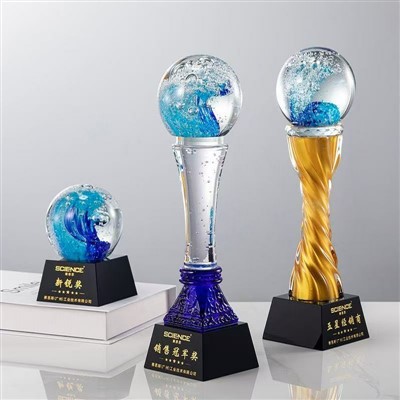
If you’re ready to get a quote for your next glass trophy order, reach out to us to discuss your specific needs, whether that’s size, customization, or quantity. We’re here to help you create the perfect award that fits your budget and honors your recipients.
Metal Medal References:
- Glass Packaging Institute. (2022). The Cost of Glass Manufacturing and Customization.
- National Association of Trophy Suppliers. (2023). Bulk Order Pricing Guidelines for Custom Awards.
- International Crystal Society. (2021). Quality Differences Between Optical Crystal and Soda-Lime Glass.
- U.S. Small Business Administration. (2022). Labor Cost Factors for Custom Manufacturing Projects.
Pujiang County Hongxin E-commerce Co., Ltd.
As one of the most professional glass trophy manufacturers and suppliers in China, we offer a wide range of products with superior quality. Please rest assured to wholesale high-end glass trophy at competitive price from our factory. Good service and punctual delivery are available.
Address: No. 6, Row 4, Section 4, Yuequan West Road, Pujiang
E-mail: hongjiangluo95@gmail.com
WebSite: https://www.crystalcraftfactory.com/
