If you’ve ever worked in fluid transfer, whether in industrial manufacturing, energy production, or chemical processing, you know that every drop of lost material, every unnecessary frictional delay, and every preventable maintenance stop can add up to real bottom-line costs. That’s why for decades, teams around the world have turned to low-loss Guillemin couplings as a reliable solution to cut waste, streamline operations, and keep workflows running smoothly. As a supplier who’s worked directly with engineering leads, plant managers, and maintenance crews for years, I often get asked: What exactly is a low-loss Guillemin coupling, and why should it matter to your operations? Let’s break it down, from how it works to why it’s become a staple for teams prioritizing efficiency and safety. Guillemin Coupling
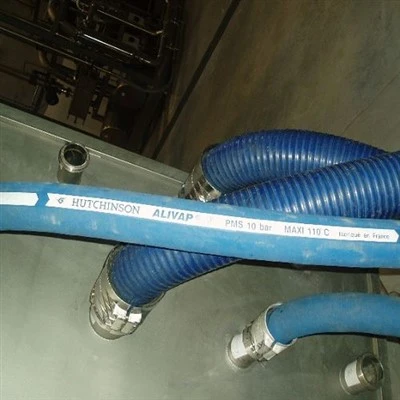
First, let’s ground this in what a standard Guillemin coupling is, to avoid confusion. The Guillemin coupling—sometimes spelled “guillemen” in casual industry talk—was originally developed in France in the early 20th century as a quick-disconnect (QD) coupling for hoses, pipes, and lines moving liquids or gases. Its core design is simple: two parts, a male end and a female end, that lock together via a quarter-turn ring mechanism, no tools required. That quick connection is its biggest draw: in high-pressure, high-turnaround environments, the ability to connect or disconnect a line in seconds, not minutes, saves time and reduces downtime. But the tradeoff with early Guillemin models was that they were far from low-loss. When you disconnect a standard coupling, residual fluid or gas inside the line can spill out, leading to product waste, safety hazards, and even environmental compliance issues—especially for hazardous materials like chemicals, fuels, or food-grade liquids that can’t be spilled.
A low-loss Guillemin adaptation fixes that core flaw, and it does so with a key design tweak: integrated poppet valves in both the male and female ends. Unlike standard couplings that leave open pathways once disconnected, these poppets are spring-loaded, pressure-actuated seals that only open when the two ends are fully engaged. When you disconnect the coupling, each poppet snaps shut immediately, trapping almost all residual fluid or gas inside the line. How much less loss? Independent industry tests show low-loss Guillemin couplings cut product loss by 95% or more compared to standard models. For a team moving 10,000 liters of fuel a day, that’s 9,500 fewer liters wasted; for a chemical manufacturer handling corrosive acids, that’s nearly zero risk of spills that could harm workers or require costly cleanup.
But low-loss Guillemin couplings aren’t just about reducing waste—they’re also built for durability, which matters for anyone dealing with harsh working conditions. Most models are constructed from corrosion-resistant materials: 316 stainless steel, aluminum, or heavy-duty brass, depending on the application. That means they can stand up to constant exposure to moisture, chemicals, and outdoor elements, unlike cheaper plastic couplings that crack or degrade after a few dozen uses. The quarter-turn lock mechanism is also reinforced to handle repeated use; a well-made low-loss Guillemin coupling will last tens of thousands of connections and disconnections without failing, which translates to less frequent replacement, lower long-term costs, and less time spent on maintenance.
Wait, but let’s address a common misconception I hear all the time: “If it’s quick-disconnect, it must be loose and prone to leaks under pressure.” That’s not true for low-loss Guillemin couplings, especially the high-pressure variants we supply. These couplings are rated to handle pressures up to 20 bar (about 290 psi) for standard models, and even higher for specialized industrial applications. The poppet valves are calibrated to seal tightly at those pressures, so you won’t get seepage when the line is connected, which is another big upgrade over standard Guillemin couplings that can develop small leaks over time from loose connections.
Another key benefit for many industries is versatility. Low-loss Guillemin couplings aren’t one-size-fits-all, which is why we stock a range of sizes, fittings, and variants to match different needs. For food and beverage processing, we offer food-grade low-loss models that are BPE (Beverage Process Equipment) compliant, made from materials that meet FDA standards for contact with consumables—so you don’t have to worry about cross-contamination when transferring milk, juice, or food oils. For construction and mining teams, we offer heavy-duty versions that can handle abrasive slurries, like concrete or gravel-water mixtures, without the coupling’s internal parts wearing out prematurely. For fire departments, low-loss Guillemin couplings (often called fire hose couplings in that sector) are designed for rapid connection to hydrants and other hoses, with minimal water loss when switching lines during a fire— a critical feature that lets firefighters act fast without wasting precious water.
I also want to call out a less-talked-about advantage: safety. Spills aren’t just costly—they’re dangerous. For industries handling volatile fuels, even a small spill can lead to fire hazards; for chemical plants, spills can expose workers to toxic materials. Low-loss Guillemin couplings eliminate almost all of that risk during connection and disconnection, so teams don’t have to wear extra PPE for spill cleanup, or worry about environmental fines for releasing hazardous materials. I remember a few years back, a plant manager from a chemical processing facility reached out to me because their old standard couplings were leading to $15,000 a month in material waste and $2,000 a month in environmental compliance fees. They switched to our low-loss Guillemin couplings, and within three months, those costs dropped to less than $100 a month. That’s the kind of return on investment that makes the upgrade worth it, even if the upfront cost is a bit higher than standard models.
Now, let’s get into how to choose the right low-loss Guillemin coupling for your needs, because not every model works for every job. First, match the size to your hose or pipe. Couplings come in sizes from ½ inch up to 6 inches, so check your line’s diameter to avoid mismatches that can lead to leaks or loss. Next, think about the material: if you’re working with food or pharmaceuticals, go for BPE-compliant food-grade steel; if you’re dealing with corrosive chemicals, 316 stainless steel is a must; if you’re moving non-abrasive liquids like water or diesel, aluminum couplings are lightweight and cost-effective. Finally, check the pressure rating. If you’re working in a low-pressure application, like irrigation or small-scale fluid transfer, a 10-bar model will work; for high-pressure jobs, like hydraulic lines or industrial spray systems, you’ll need a 20-bar or higher rating to ensure the coupling holds up.
I should also note a few common mistakes people make when using low-loss Guillemin couplings. First, don’t force the quarter-turn lock—if you’re having trouble connecting the two ends, double-check that the poppets are aligned and there’s no dirt or debris stuck in the ends. A blocked poppet won’t open fully, leading to leaks. Second, make sure the coupling is fully engaged before putting pressure on the line. A half-locked coupling will come loose under pressure, leading to spills or damage. Third, regularly inspect your couplings for wear: if the seal rings on the poppets are cracked or the lock mechanism is loose, replace them right away, even if they still connect. A worn seal can lead to hidden loss that adds up over time.
At the end of the day, the core purpose of a low-loss Guillemin coupling is simple: do more with less. Less wasted material, less downtime, less safety risk, less maintenance. For over a decade, we’ve worked with teams across industries to supply these couplings, and every time, we hear the same feedback: it’s one of those small upgrades that makes a huge difference in day-to-day operations. If you’re tired of dealing with unnecessary product loss, frequent leaks, or slow connection times, it’s worth taking a closer look at whether low-loss Guillemin couplings are right for your workflow.

If you have questions about sizing, material options, or pricing, or you’re ready to place an order to test a set for your team, don’t hesitate to reach out to our team to discuss your requirements. We’re here to help you find the right solution to cut costs and improve efficiency in your operations.
Storz Coupling References
- Fluid Power Society. (2021). Quick-Disconnect Coupling Performance Standards for Low-Loss Models. Industrial Fluid Transfer Journal.
- International Organization for Standardization (ISO). (2019). ISO 19237: Couplings for Fluid Transfer – Quick-Disconnect Types, Safety and Efficiency Requirements.
- National Fire Protection Association (NFPA). (2020). NFPA 1901: Standard for Automotive Fire Apparatus, Low-Loss Hose Coupling Specifications.
- American National Standards Institute (ANSI). (2018). ANSI B2.1: Specification for Couplings for Food and Beverage Processing Equipment, Material and Performance Requirements.
Suzhou Fuyikang Metal Industrial Co., Ltd.
As one of the most professional guillemin coupling manufacturers and suppliers in China, we have world-leading production equipment and strong manufacturing capabilities. We warmly welcome you to buy bulk high quality guillemin coupling for sale here from our factory.
Address: No.26.Mudong Rd,Mudu Town, Wuzhong Distric, Suzhou City,Jiangsu Province,China
E-mail: SZFYK@SZFUYIKANG-COUPLING.COM
WebSite: https://www.fyk-coupling.com/
