If you’ve ever wandered through a forested, damp Pacific Northwest understory, you might have stumbled upon the small, golden-brown caps of copper spike mushrooms—scientifically known as Aureoboletus auriporus—a wild edible that’s grown in popularity for its nutty, earthy flavor and meaty texture when dried. For the past seven years, I’ve run a small, family-owned dried copper spike mushroom supplier, and one of the most common questions I get from new bulk buyers, specialty grocers, and artisanal chefs is: “Are there any third-party certifications that guarantee these dried mushrooms are high-quality?” Dried Copper Spike Mushrooms
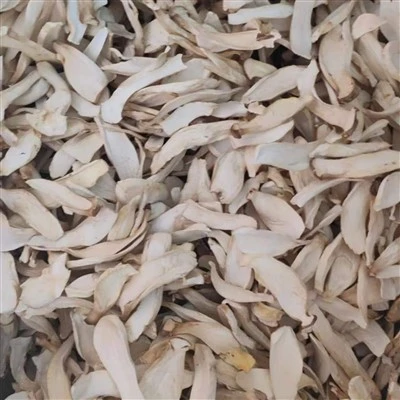
It’s a fair question. Wild-harvested mushrooms like copper spikes aren’t grown in controlled hydroponic farms, so their quality, safety, and consistency can vary based on where and how they’re collected, processed, and stored. Let’s break down what certifications exist for dried copper spike mushrooms, what they actually mean, and why they matter for both buyers and the suppliers who want to stand behind their product.
First, a quick primer on why copper spikes are different from common cultivated mushrooms like button or shiitake. Copper spikes are exclusively wild-harvested—they grow symbiotically with coniferous trees (Douglas fir, western red cedar, and spruce, mostly) in old-growth and mature second-growth forests across the Pacific Northwest, parts of the Northern Rockies, and even small pockets of the Northeast. That means every batch is a product of its environment: a wet, cool season in Oregon might yield mushrooms with higher moisture content, while a drier year in Washington might have more concentrated flavor. Drying is the critical step here—if done at too high a temperature, it can burn the delicate umami compounds; if done too slowly, it can introduce mold. So quality starts long before certification is even considered.
When buyers ask about certifications, they’re usually looking for two things: proof the mushrooms are safe to eat, and proof they’re what we say they are (i.e., no mislabeled or adulterated fungi mixed in). For most wild-harvested foods, especially specialty mushrooms, the certifications that apply are a mix of general food safety standards, wild-harvest specific programs, and third-party identity verification. There’s no “silver bullet” certification exclusive to dried copper spike mushrooms, but there are several that are widely recognized in the specialty food space.
Let’s start with the most basic, non-negotiable certifications for any food product: food safety. The two big ones for suppliers operating in North America are SQF (Safe Quality Food) and HACCP (Hazard Analysis and Critical Control Points). I’ve held SQF Level 2 certification for my operation for four years, and it’s non-negotiable for any buyer who wants to work with me. What does it mean for copper spikes? SQF requires every step of the process to be documented: when mushrooms are harvested (we only harvest from certified wild foragers who pass a annual identification test, so we never accidentally collect lookalike boletes—some of which are toxic), when they move to our drying facility, what temperature and humidity levels we use during drying (we hold ours at 110°F for 12 hours, a sweet spot that preserves flavor without destroying nutrients), and how we package and store the final product. It also includes regular testing for common contaminants: salmonella, E. coli, and heavy metals like lead or arsenic, which can leach from soil in some forested areas. For copper spikes, which are often collected from near busy roads or industrial sites, this testing is critical. I run these tests for every batch, and the reports are available to any buyer on request.
Next, certifications specifically for wild-harvested products. The USDA Organic program is one of the most well-known, but it’s important to note that organic certification for wild-harvested mushrooms is different from organic certification for cultivated crops. To get USDA Organic wild mushroom certification, you have to prove that the forest where the mushrooms are growing has not been treated with synthetic pesticides, herbicides, or fertilizers for at least three years. For copper spikes, which grow in old-growth forests, this is usually achievable—most of my harvest areas are on public lands managed by the U.S. Forest Service, which has strict rules against chemical treatments. That said, organic certification doesn’t mean the mushrooms are “perfect” or have more flavor; it just means they meet the USDA’s standards for no synthetic inputs. I offer organic dried copper spikes as a premium line, and it’s been popular with health-focused grocery chains. There’s also the Non-GMO Project Verified certification, which is less relevant for wild mushrooms (they don’t use GMOs), but it’s a selling point for buyers who target customers who avoid GMOs.
Another key certification for specialty mushrooms is identity testing. Copper spikes look similar to a few other boletes—like the bitter bolete (Tylopilus felleus), which isn’t toxic but tastes awful, or some rare toxic boletes. The Gold Standard here is DNA barcoding, a third-party test that identifies the unique genetic sequence of copper spike mushrooms to confirm they’re not adulterated. I started doing DNA barcoding on every batch three years ago after a small batch mix-up early in my career (I’d trusted a new forager who misidentified a small number of bitter boletes—we caught it during sorting, but it made me realize how critical verification is). DNA barcoding isn’t cheap, running about $150 per batch, but it gives buyers peace of mind that they’re getting exactly what they paid for: real copper spike mushrooms, no substitutions. A lot of larger suppliers skip this step, but for a small operation like mine that focuses on quality, it’s non-negotiable.
There are also regional certifications that apply if you sell outside the U.S. For example, the EU has the Protected Designation of Origin (PDO) and Protected Geographical Indication (PGI) programs, which label products that come from a specific region and have unique qualities tied to that area. Right now, copper spikes don’t have a formal PDO or PGI in the EU, but if my operation ever expands to supply there, we’d apply for the Pacific Northwest PGI for wild copper spikes, since our harvest areas are limited to that region and the flavor is distinct from copper spikes harvested in, say, Canada’s British Columbia. For now, though, most international buyers accept our SQF and DNA barcoding as proof of origin and quality.
It’s important to be honest about what certifications don’t do. None of these certifications guarantee that every dried copper spike in a 50-pound bag is identical—wild foods are inherently variable. A certified organic copper spike might be slightly smaller or have a more muted flavor than a non-organic one, as long as it meets safety standards. And no certification can test for subjective factors like flavor or texture, which is why I always encourage buyers to ask for a sample before placing a large order.
I also want to address the elephant in the room: there are a lot of suppliers out there selling “certified” dried wild mushrooms that don’t actually have third-party verification. Some will put a sticker on their bag that says “Wild Harvested” or “Organic” without any paperwork to back it up. As someone who’s been in this business long enough to see a lot of bad actors, that’s the biggest red flag for buyers. A real certification will always have a paper trail, an audit process, and contact information for the third-party certifier. If a supplier can’t provide that, walk away.
For my part, I’ve spent thousands of dollars over the years on certifications, testing, and training for my foragers, and it’s worth every penny. When a chef buys my dried copper spikes, they know they’re getting a product that’s safe, authentic, and consistent enough to use in a high-end risotto or a custom mushroom blend for a specialty sauce. Last year, a pasta restaurant in Chicago told me that their customers could taste the difference between my copper spikes and a cheaper, uncertified batch they’d used before—nutty, not woody, with a texture that rehydrated evenly, not mushy. That’s the kind of feedback that makes all the paperwork worth it.
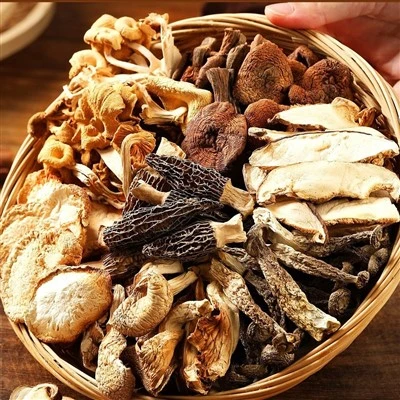
If you’re a specialty grocer, a chef, or a distributor looking for high-quality dried copper spike mushrooms, don’t hesitate to reach out to discuss bulk ordering, sample requests, or any certification documentation you need to qualify your product. I’m always happy to walk through our process, show you our certification reports, or even connect you with our foragers to learn more about how we harvest these unique mushrooms.
Dried Black Fungus & Elm Ear References:
- U.S. Food and Drug Administration (FDA). "Hazard Analysis and Critical Control Points (HACCP) for Food."
- Safe Quality Food Institute (SQFI). "SQF Code Edition 9: Requirements for Food Safety and Quality Systems."
- United States Department of Agriculture (USDA). "Organic Certification for Wild Harvested Agricultural Products."
- International Society for Mushroom Science (ISMS). "DNA Barcoding for Fungal Identification in Commercial Products."
- European Commission. "Protected Designation of Origin (PDO) and Protected Geographical Indication (PGI) Explained."
Qingyuan Manchu Autonomous County Lichang Native Produce Co., Ltd.
We are one of the most professional dried copper spike mushrooms manufacturers and suppliers in China, featured by quality products and good price. Please rest assured to wholesale bulk dried copper spike mushrooms for sale here from our factory. Welcome to view our website for more information.
Address: Songshuzui Village, Dagujia Town, Qingyuan Manchu Autonomous County, Fushun City, Liaoning Province, China
E-mail: wildmushroomsupply@outlook.com
WebSite: https://www.wildmushroomsupply.com/
