When you run an outdoor fan supply business, the last thing you want to hear from a customer is that a unit they installed on a patio, balcony, or market stall fell over—damaging the fan, hurting someone, or creating a liability. I’ve seen it happen too many times: a customer grabs a “one-size-fits-all” base, bolts it to a flimsy wood deck, or skips the step of securing the fan head, only for a gust of wind or accidental bump to send the entire unit crashing. Over 12 years in this industry, I’ve worked with hundreds of installers and DIY customers to refine secure outdoor fan setups, balancing practicality with safety. This isn’t just about following instructions—it’s about understanding how outdoor fans behave in their unique environments, and how to mitigate risks with solutions that work for every space. Outdoor Fan
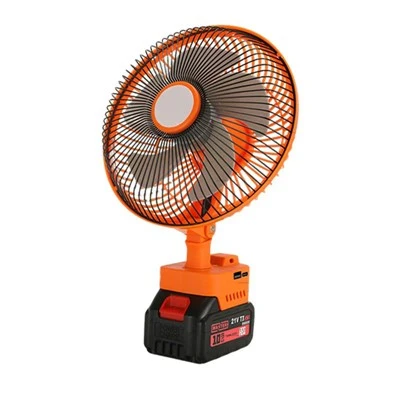
First, let’s start with the foundation: choosing the right base for your fan. Many customers underestimate how much an outdoor fan weighs when it’s fully assembled, and even more so how much force wind can exert on its blades. A standard 18-inch pedestal outdoor fan, for example, needs a base that weighs at least twice as much as the fan head and stand combined to avoid tipping. I’ve seen customers use a 20-lb plastic base for a 35-lb fan—on a sloped balcony, that’s a recipe for disaster. Instead, opt for weighted, concrete or cast-iron bases specifically designed for outdoor fans, not generic furniture. If you’re using a tabletop outdoor fan, the rule still applies: weight is non-negotiable. I also recommend avoiding bases that are too small; a 12-inch wide base for a 16-inch fan leaves too much leverage at the top. For permanent installations, pouring a concrete base that protrudes 6 inches around the fan’s base plate isn’t overkill—it’s the standard for commercial patios or public spaces where wind gusts can hit 50+ mph.
Next, securing the stand itself to the base. Even a heavy base won’t hold if the stand isn’t properly anchored. Many people use loose bolts or just the base’s pre-drilled holes, but that’s where mistakes happen. I always tell customers to use stainless steel bolts and lock nuts—corrosion is a big issue outdoors, and rusted threads will come loose over time. For pedestal fans, run the bolts all the way through the base plate and into a reinforced insert if the base is hollow. I’ve had customers come back saying their fan wobbled after a month, only to find they’d only tightened the top nut, leaving the bottom of the bolt loose. Lock washers are another small but critical detail: they prevent vibrations from the fan’s motor and blades from loosening the nuts, even on calm days. For tabletop fans, if you’re placing them on a surface like a stone counter, a few strips of heavy-duty double-sided outdoor tape (rated for -40°F to 140°F, no exceptions) can add extra grip to keep it from sliding, though it’s not a replacement for a weighted base.
One of the most overlooked steps is securing the fan head, not just the stand. Most outdoor fans have a tilt function, which is great for directing airflow, but that tilt creates leverage that can make the whole unit tip. If your customer is angling the fan 45 degrees to blow towards a dining table, that’s twice the force pulling the top of the fan away from the base compared to pointing it straight up. I recommend adding a secondary safety strap here—something as simple as a heavy-duty nylon ratchet strap or a marine-grade polyester cable, attached from the fan head’s mounting point to a fixed structure nearby. Wait, fixed structure—you have to choose that carefully. Don’t tie the strap to a flimsy patio umbrella pole, which can bend or snap. Instead, anchor it to a concrete patio anchor, a heavy-duty deck post, or even a metal awning frame that’s rated to hold at least 100 lbs. I’ve even seen customers use eye bolts screwed into exterior wall studs, which works as long as the bolts are rated for outdoor use. For commercial setups, we supply specialized safety cables that come pre-sized for our fan lines, so customers don’t have to guess the length or weight rating.
Environmental factors are non-negotiable when securing an outdoor fan. Wind is the biggest threat, and not all wind is the same—coastal areas have salt air that weakens hardware over time, mountain regions see sudden gusts from valleys, and even urban areas can have wind funnelled between buildings. I always advise customers in high-wind zones (that’s anywhere with average wind speeds over 10 mph annually, per NOAA data) to add an extra layer of security: for pedestal fans, extend the stand’s legs with a ground anchor, especially if they’re placing the fan on grass or gravel. A metal ground anchor driven 18 inches into the soil, then connected to the base with a steel cable, will hold the fan down even during a storm. For coastal customers, every 6 months they should check all bolts and straps—salt corrosion can eat through lock nuts in a year, so a quick tightening prevents failures. Even in mild climates, I remind customers to remove fans or take extra precautions during hurricane season, but that’s a separate step from day-to-day securing.
Then there’s the DIY vs. professional install question. A lot of my customers are small business owners or homeowners who want to install their own outdoor fans, and that’s great, but there are times when hiring a pro is worth it. If you’re installing fans for a restaurant patio with 20+ units, a pro will know how to anchor to deck beams and concrete without causing damage, and they’ll calculate the right base weight for your specific space. For a residential balcony, if the fan is heavy and the balcony structure is older, a pro can check if anchoring to the building’s exterior is safe. But if you’re a DIYer, there are also safe shortcuts I recommend: for example, instead of buying a custom concrete base, you can fill a plastic base with sand (about 50 lbs) and seal the fill port with silicone—this is a cheap way to add weight without the cost of concrete. Just make sure the sand is dry before filling it, because wet sand is heavier, but if it gets inside the base and freezes, it can crack the unit.
I’ve also seen common mistakes that are easy to avoid. One is placing the fan too close to edges—balcony railings, patio overhangs, or outdoor tables. If a customer has a fan on the very edge of a balcony, a accidental bump from someone leaning over the rail can tip it over, so keeping it at least 12 inches away from edges is a good rule. Another mistake is using generic hardware instead of outdoor-rated parts. I can’t stress this enough: regular steel bolts will rust in 6 months outdoors, so always use 304 or 316 stainless steel, which is resistant to both rust and salt. And never use rope instead of a safety strap—rope can fray over time, especially from wind and sunlight, so marine-grade cable or heavy-duty webbing is the only way to go.
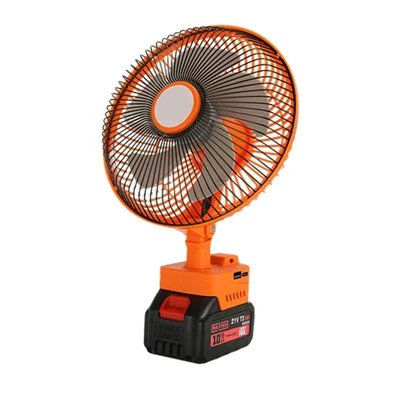
At the end of the day, securing an outdoor fan isn’t about overcomplicating things—it’s about matching the solution to the space. Whether you’re setting up one fan for your backyard or a dozen for a commercial space, the key is weight, anchoring, and accounting for your environment. Our team has spent years testing these setups, and we’ve refined our own product line to make security easier: all our pedestal fans come with pre-drilled mounting holes and include the necessary lock nuts, and we offer compatible bases and safety straps as add-ons for customers who don’t want to source parts separately. If you’re looking to outfit a patio, market, or residential space with secure, high-quality outdoor fans, our team can walk you through tailored solutions that fit your needs. We work with small business owners, contractors, and homeowners alike, and we’re happy to answer questions about installation, hardware, or any other part of setting up outdoor fans that stay safe and stable. Don’t hesitate to reach out to our team to discuss your project details, and we’ll help you make sure your fans stay put, even when the wind picks up.
Outdoor Fan References
- National Oceanic and Atmospheric Administration (NOAA), "Wind Speed Guidelines for Outdoor Structures," 2022.
- Outdoor Power Equipment Institute (OPEI), "Safety Standards for Commercial Outdoor Fans," 2021.
- International Building Code (IBC), "Anchorage Requirements for Exterior Equipment," 2023.
- American Society of Civil Engineers (ASCE), "Wind Loads for Low-Rise Structures," 2019.
Yongkang Agudo Industry & Trade Co., Ltd.
As one of the most professional outdoor fan manufacturers in China, we’re featured by high quality customized products. Welcome to wholesale bulk advanced outdoor fan in stock here from our factory. If you have any enquiry about pricelist and free sample, please feel free to email us.
Address: 2nd Floor, Unit 2, Building 5, No. 46 Xicheng Huacheng West Road, Xicheng Subdistrict, Yongkang City, Zhejiang Province
E-mail: 15888900905@163.com
WebSite: https://www.cnagudo.com/
