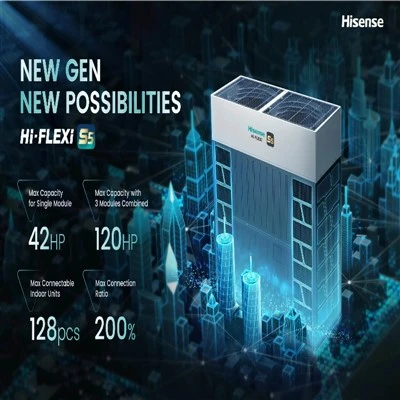
If you’ve ever dealt with a broken AC in the middle of a summer heatwave, or watched your factory’s production line grind to a halt because one chiller unit died, you know how much cooling systems actually matter—beyond just keeping things comfortable. For years, most businesses have relied on a jumble of separate cooling parts: a rooftop AC for the office, a standalone chiller for the warehouse, maybe a portable unit for the server room. Each of these parts works in its own bubble, right? But lately, more and more folks I talk to are switching to integrated cooling systems, and honestly? The difference is night and day. As someone who’s been supplying these systems for over a decade—seen the headaches old setups cause, and the wins the right integrated setups deliver—I thought I’d break down the real, tangible benefits, not just the sales jargon. Let’s cut through the noise. First off, let’s get one thing straight: an integrated cooling system isn’t just “a bunch of parts put together.” It’s a single, connected network that ties all your cooling needs—office, warehouse, servers, whatever—into one system controlled by a central software. No more manually adjusting three different thermostats. No more ignoring that the warehouse AC is running full blast when it’s 70 degrees in the office. It works in tandem, which saves you more money than you’d think on energy bills. Energy waste is the biggest hidden cost with separate cooling systems. I had a small manufacturing client last year who was paying $18k a month in electricity for their four separate chillers and AC units. They switched to our integrated system, and after the first quarter, their bill dropped to $12k. Why? Because the integrated system uses real-time data to adjust each zone’s cooling. If the server room only needs 68 degrees instead of the 72 the old system kept it at, it’ll dial back without messing with the office’s 74 degrees. Separate units don’t talk to each other, so they all run at max capacity even when they don’t need to. That’s like leaving your fridge, oven, and dishwasher all on high all day just because you cooked a meal—total overkill, and pricey. Next up is way less downtime, which is huge for businesses. I recently had a distribution center client whose old setup had three separate cooling units. Last winter, two of the warehouse chillers gave out at the same time. They had to rent temporary units for $2,500 a day, and lost a week of shipments because parts of their warehouse got too cold, damaging the inventory. With an integrated system, if one component has a hiccup, the central software automatically adjusts the other parts to keep everything running while the issue is fixed. No more scrambling for emergency rentals. Also, our systems have built-in predictive alerts—they’ll send us a notification weeks before a part might fail, so we can schedule a repair during off-hours, not mid-shift. That’s a game-changer for avoiding costly disruptions. Then there’s maintenance that’s way simpler and cheaper. With separate cooling systems, you’re dealing with three or four different service techs, each with their own schedule, bills, and parts. If the office AC breaks, you call the AC guy; if the warehouse chiller acts up, you call the refrigeration tech; if the server room unit has an issue, you hit up an HVAC specialist. That’s three different invoices, three different appointments, and wait times that can take days. Integrated cooling systems use the same core parts and software, so you only need one maintenance plan, one point of contact, and any replacement parts are universal for the system. I had a retail client who used to spend $3,000 a quarter on maintenance for their separate ACs. Now they pay $1,500 a quarter for our integrated system maintenance, and any repairs take half the time because the tech already knows the system. It’s less paperwork, fewer headaches, and way more consistent. Let’s not sleep on comfort and consistency for your team or customers. Ever walked into a store where part of the building is freezing and part is stuffy? That’s separate cooling units fighting each other. Integrated systems fix that because each zone is calibrated to the exact temperature you set, and the central system balances it all. For office teams, that means no one complaining their desk is too hot while a coworker is grabbing a blanket from the cold side of the room. For retail or hospitality, that means customers stay longer because the space feels comfortable, which can actually boost sales. One coffee shop client of mine saw a 12% jump in weekend sales after installing an integrated system—they said people used to avoid sitting by the entrance where the AC hit them, but now the entrance zone is perfectly cool, and the back by the pastry case is just right. It’s the little comfort details that add up. Another big one is scalability. Let’s say you have a small startup right now, with a 1,000 sq ft office, but you’re planning to expand into a 3,000 sq ft warehouse in six months. With separate cooling systems, you have to buy an entirely new unit for the warehouse—expensive, and you might end up with an unused small unit sitting around. Integrated cooling systems are modular, meaning you can add on extra zones or components as you grow, without replacing the whole system. We had a tech company client that started with 2 zones (office and server room) and added a 3rd zone for their breakroom and event space a year later. They just ordered the extra sensors and a small module, and our team set it up in a day. They saved $10k compared to if they’d bought all separate units when they launched. Now, I know some folks are thinking, “Wait, integrated systems are more expensive upfront, right?” Yeah, that’s true. Buying the initial setup costs a bit more than separate units, but here’s the thing: the payback period is usually 18 to 24 months, thanks to all the energy savings, lower maintenance, and less downtime. For example, a small restaurant might spend $8k on a separate AC and kitchen cooling setup, while an integrated system is $11k upfront. But their annual energy bill is $4k with separate units, vs $2.2k with integrated. Maintenance is $1.8k a year vs $900. After two years, the integrated system has already paid for the extra $3k upfront, and they keep saving money every year after that. I tell every client this: don’t just look at the sticker price. Look at the total cost of ownership over 5 years, 10 years. Most separate cooling setups end up costing way more long-term because of the wasted energy, frequent repairs, and downtime. There are also environmental benefits, which a lot of businesses care about these days for their ESG goals. Integrated systems are way more energy efficient, so they use less electricity, which means a lower carbon footprint. A manufacturing client I worked with recently used our integrated system to cut their carbon emissions from cooling by 35%, which helped them qualify for a local green business grant. Plus, less energy use means fewer fossil fuels burned—small stuff, but every bit adds up. I’ve heard a few questions from skeptics: “What if the central software crashes?” Fair question, but modern integrated systems have backup built in. If the main control has a glitch, the local zone controls kick in automatically, so you won’t lose all cooling. And our systems come with 24/7 monitoring, so we can fix any software issues remotely in minutes, no tech visit needed. We had one client last winter where the central sensor for the warehouse went down—we logged in remotely, adjusted it from our office, and fixed it before they even noticed anything was off. That’s the kind of reliability you don’t get with separate units. At the end of the day, choosing a cooling system is about more than just staying cold. It’s about keeping your business running smoothly, saving money, keeping your team happy, and even doing a little good for the planet. I’ve seen too many businesses get stuck with old, messy cooling setups that cost them thousands in wasted cash and lost productivity. An integrated cooling system isn’t just a product—it’s a way to take the stress out of cooling. If you’re tired of dealing with broken units, sky-high energy bills, or confusing maintenance, hit us up to talk through your specific needs. We’ll walk you through what would work best for your space, no pressure, no sales pitch nonsense. You won’t regret it. If you’re ready to streamline your cooling and start saving, get in touch to discuss how an integrated cooling system can work for your operations. Integrated Cooling System
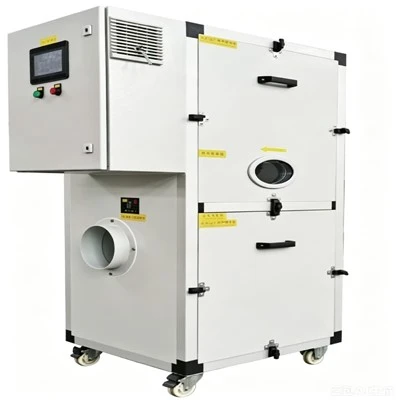
Greenhouse Dehumidifier References:
- U.S. Department of Energy. (2022). Energy Efficiency Improvements in Commercial HVAC Systems.
- Air Conditioning Contractors of America. (2023). Integrated System Maintenance Best Practices for Commercial Facilities.
- International Energy Agency. (2021). Cooling Solutions for Reducing Energy Waste in Small and Medium Enterprises.
Hangzhou Dayu HVAC Engineering Co., Ltd.
As one of the most professional integrated cooling system manufacturers and suppliers in China, we have world-leading production equipment and strong manufacturing capabilities. If you’re going to buy customized integrated cooling system made in China, welcome to get quotation from our factory. For price consultation, contact us.
Address: Room 1004, Building 1, Xicheng Business Tower, Xihu District, Hangzhou City, Zhejiang Province, China
E-mail: info@hi-hvac.com
WebSite: https://www.hi-hvac.com/
